
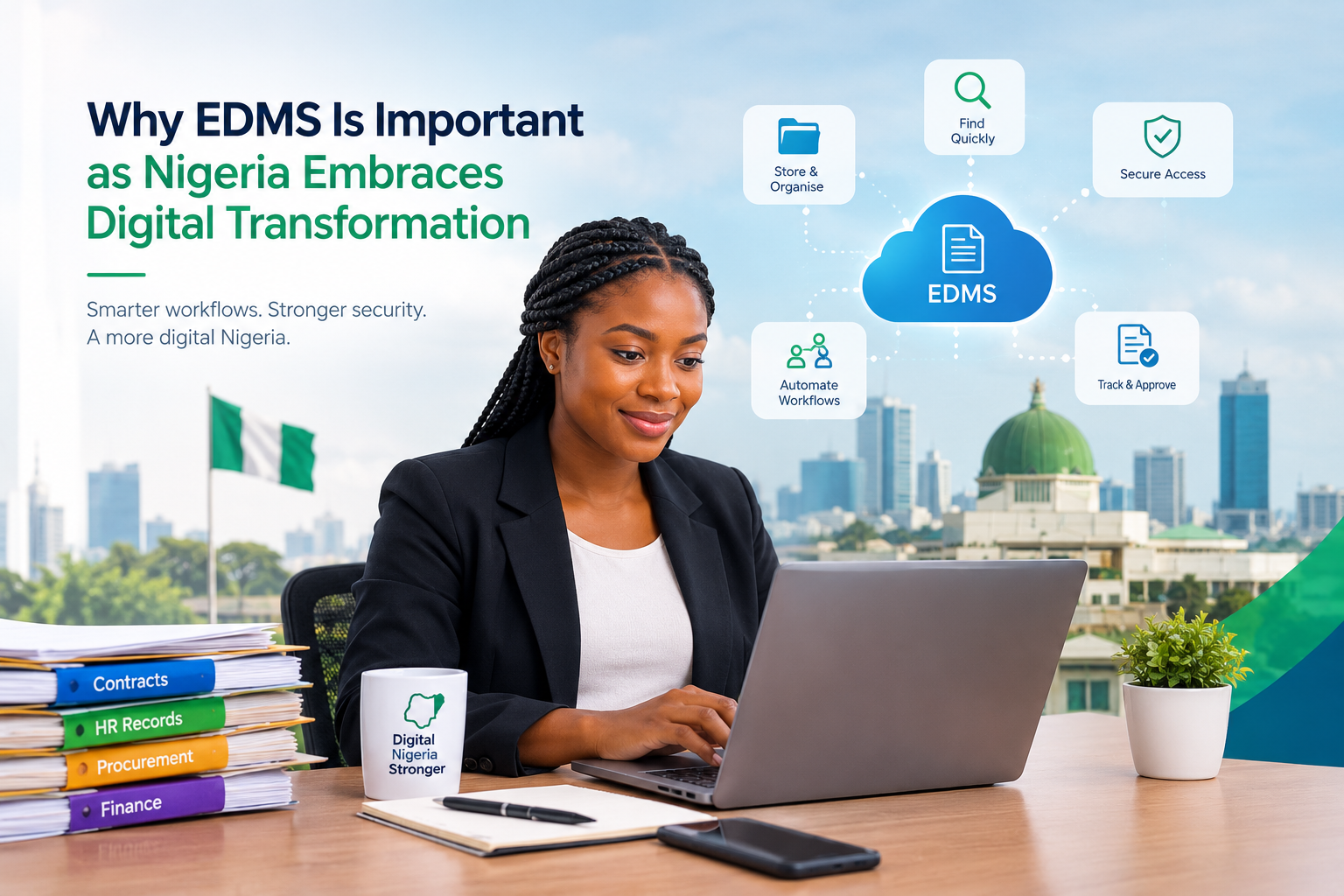
As Nigeria embraces digital transformation, private businesses and government institutions must rethink how they manage information and everyday workflows. Discover how an Electronic Document Management System (EDMS) can reduce paperwork, automate approvals, strengthen document security, and improve operational efficiency.
Nigeria is steadily moving towards a more digital way of working. From online public services to electronic government workflows, organisations are increasingly exploring how technology can improve productivity, service delivery, and information management.
This shift is becoming visible in the public sector. In December 2025, the Federal Ministry of Agriculture and Food Security launched an Electronic Document Management System (EDMS) to digitise records, automate workflows, and reduce reliance on paper-based processes. The Federal Ministry of Innovation, Science and Technology also went live on the 1GOV Enterprise Content Management System that same month.
These developments highlight an important question for both private businesses and government institutions: as organisations embrace digital transformation, are their internal document management processes keeping pace?
A business may have a website, use email, and conduct meetings online, yet still rely on physical files, manual approvals, and paper-based record keeping. This creates a gap between adopting digital tools and truly transforming how work gets done.
This is where an Electronic Document Management System becomes valuable.
What Is an EDMS?
An Electronic Document Management System (EDMS) is a digital solution that helps organisations store, organise, retrieve, track, and manage documents throughout their lifecycle.
Instead of depending on filing cabinets, scattered computer folders, and lengthy paper approval processes, employees can use a centralised system to access authorised documents, manage versions, track changes, and move work through defined approval stages.
Why Private and Government Organisations Need EDMS
1. Faster Access to Information
Searching for a contract, invoice, official letter, personnel file, or procurement record should not take hours.
An EDMS allows authorised users to search for documents using file names, dates, reference numbers, categories, and other metadata. This reduces time spent searching and helps teams make decisions using information they can retrieve more efficiently.
2. Improved Security and Accountability
Important documents often contain confidential business information, financial records, employee details, or sensitive government data.
An EDMS can provide role-based access, authentication, document histories, and audit trails. These features help organisations control who can view or modify documents and establish a clearer record of document-related activities.
3. Automated Workflows and Approvals
Manual document circulation can slow down procurement, contract reviews, financial approvals, and internal correspondence.
With an EDMS, organisations can configure workflows that route documents to the appropriate people, notify reviewers, track pending approvals, and record completed actions.
This helps reduce avoidable delays and gives managers better visibility into the status of important work.
4. Reduced Paperwork and Operating Costs
Printing, photocopying, physical storage, transporting files, and manually filing documents all consume time and resources.
Digitising document processes can reduce these recurring demands, free up office space, and allow employees to focus on higher-value responsibilities.
However, organisations should assess implementation, licensing, training, support, and maintenance costs to understand the overall financial benefit.
5. Better Records Management and Continuity
When important information exists only in physical files or an individual employee’s computer, retrieving it can become difficult when that person is unavailable or leaves the organisation.
An EDMS supports more structured record keeping, document version control, retention management, and continuity of institutional knowledge. These capabilities are valuable to private companies and public institutions that must preserve reliable records over time.
Conclusion: Digital Transformation Must Go Beyond Technology
Nigeria’s growing adoption of digital government workflows demonstrates why organisations need to rethink how information moves through their operations. But digitisation is not simply about scanning paper documents or moving files onto computers. It is about making information easier to access, processes easier to track, and work easier to manage.
For private businesses, EDMS can support efficiency, collaboration, and better control over business records. For government institutions, it can strengthen records management, accountability, and administrative service delivery.
As organisations continue their digital transformation journeys, effective document management should be part of the conversation.
Is your organisation ready to move beyond paper-based processes?
Saphistech can help your organisation explore technology solutions aligned with its operational needs and digital transformation goals.
Contact our team to discuss your requirements and identify a practical way forward.